Structural Drying & Dehumidification in Statham, GA
Pulling the standing water is step one. Drying the structure to a measured reading is what actually saves your Statham home, and the crew does not guess at it.
☎ (762) 728-6170Tap to call the 24/7 dispatch line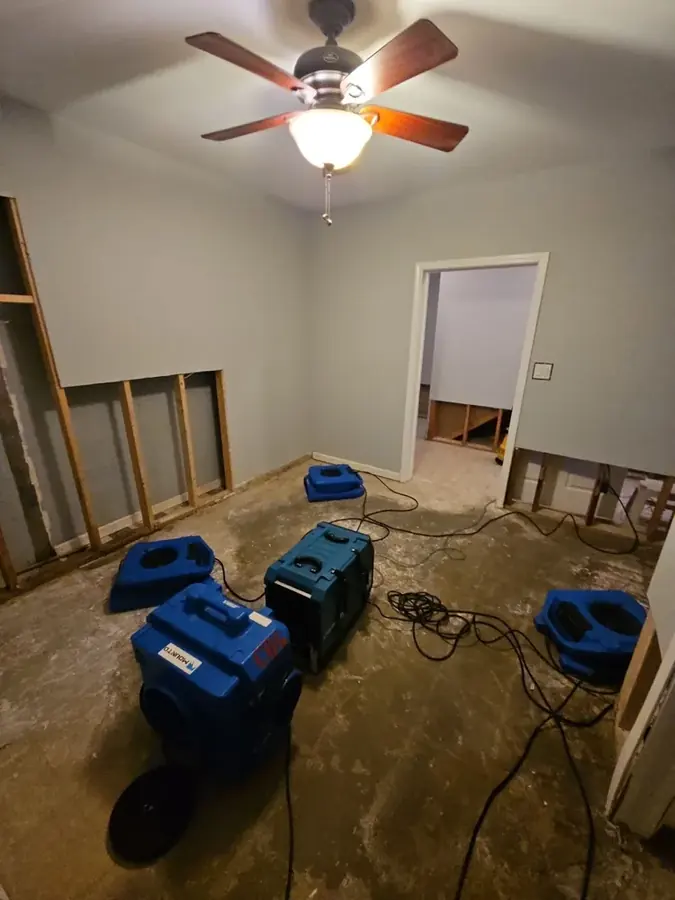
Getting the standing water out stops the flood, but the water that soaked into your drywall, subfloor, and framing is still there, and that trapped moisture is what grows mold and warps materials. B&D Restoration dries homes across Statham and Barrow County to a measured standard with commercial air movers and dehumidifiers. Want a rough idea of how long yours might take? Try our drying-time estimator, then call for the real number.
How structural drying is handled in Statham
Call & dispatch
The response team answers 24/7 and the nearest Barrow County crew heads out with truck-mounted pumps, air movers, and moisture meters.
On-site assessment
The crew finds the source and maps the full reach of the water, including what soaked into the subfloor, crawl space, and wall cavities.
Extract & dry
The extraction crew pulls the standing water, then runs air movers and LGR dehumidifiers to a measured dry standard, not just the surface.
Verify & document
The crew logs moisture readings until the structure is dry, then documents the loss with the photos and daily readings an adjuster needs.
Why drying takes longer in Northeast Georgia's humidity
Drying is really just evaporation, and evaporation depends on how much moisture the surrounding air can still absorb. In our humid subtropical climate the air is already carrying a heavy load of moisture for much of the year, so it has less room to pull water out of your walls and floors.
- High dew points. Muggy Barrow County air slows how fast wet materials give up their moisture.
- A fan alone is not enough. Blowing humid air across a wet wall just moves damp air around, it does not remove the water.
- Dehumidifiers do the real work. Low-grain refrigerant dehumidifiers pull the moisture out of the air so the structure can keep drying.
Air movers, LGR dehumidifiers, and daily monitoring
Proper structural drying is a balanced system, not a pile of fans. Each piece has a job.
- Air movers. Positioned to sweep the wet surfaces, they lift moisture off floors, walls, and framing into the air.
- LGR dehumidifiers. They condense that airborne moisture and remove it, keeping the room dry enough to keep pulling water from the structure.
- Daily monitoring. We return to meter the materials each day and reposition equipment as the readings drop.
The EPA guidance on mold recommends drying wet materials within 24 to 48 hours, which is the window this system is built to hit.
A wet wall that feels dry on the surface is still wet inside. Call now and the crew meters it and dries it right.
☎ Call (762) 728-6170Drying inside walls, floors, and crawl spaces
Surface dry and structurally dry are two very different things. A baseboard can feel fine while the bottom plate behind it and the subfloor under it are soaked, and that hidden moisture is where mold starts.
The crew dries the cavities, not just the paint. That can mean drilling discreet ports to move air inside a wall, lifting flooring to reach a wet subfloor, or drying a crawl space under the affected rooms. It all follows the IICRC S500 standard, and it usually starts right after our water extraction crew clears the standing water.
Humidity and the mold clock
Because our summers keep dew points high, wet materials that are not actively dried can stay damp long enough to grow mold, the same clock that makes mold the top pain point across Barrow County. Controlling the humidity in the space, following EPA moisture-control guidance, is what keeps a water loss from turning into a mold job, not just wiping the surface dry.
How we confirm it is dry
We do not call a home dry because it looks dry. The crew meters the materials and compares them against a dry standard elsewhere in the house, and only when the numbers line up does it pull the equipment.
That discipline protects you two ways: it prevents the premature teardown of materials that would have dried, and it stops the opposite mistake of closing a wall over moisture that later blooms into mold. B&D Restoration documents those daily readings for your insurer as part of the file. We do not quote a flat price sight unseen, so call for an exact quote on your home.
Why Statham calls the local pros first
Rapid local response
The response team answers 24/7 and the nearest crew heads out the moment you call, day or night, across Statham and Barrow County.
IICRC S500 drying standard
Trained crews with truck-mounted pumps, air movers, and moisture meters dry to a measured standard, not a mop and a fan.
Claim-ready documentation
The loss is documented with photos and daily moisture readings, the paperwork an adjuster needs to move a claim.
Local water experts
Vented crawl spaces, humid summers, hard winter freezes, and NE-Georgia storms, so the local pros know how water moves in Barrow County homes.
Serving Statham and all of Barrow County
Statham water damage pros dispatch across Barrow County and the Highway 316 corridor, day or night.
Statham water damage pros cover all of Barrow County and the Highway 316 corridor, day or night, and reach most homes fast.
Coverage runs across Statham, Winder, Bethlehem, Auburn, Bogart, Watkinsville, Athens, Jefferson, and Monroe.
See every neighborhood and ZIP covered ›Related restoration services
Common questions, answered
How long does structural drying take?
Most homes dry in about three to five days, though heavily soaked framing, hardwood, or a crawl space can take longer. Our humidity here stretches it compared to a dry climate. Our drying-time estimator gives a rough range, and we confirm the real timeline with daily meter readings.
Why can't I just run fans and dry it myself?
Fans move air but do not remove moisture, so in humid Barrow County air you can run box fans for days and still leave the structure wet inside. Real drying pairs air movers with dehumidifiers that actually pull the moisture out, and it is measured, not guessed.
Do you dry inside the walls and under the floor?
Yes. Surface dry is not structurally dry. The crew dries wall cavities, subfloor, and framing, sometimes drilling small ports or lifting flooring to reach trapped moisture, because that hidden dampness is exactly where mold gets started.
How do you know when it is actually dry?
The crew meters the affected materials and compares them to a dry standard elsewhere in the home. Only when the readings match does it pull the equipment. That keeps the crew from tearing out materials that would have dried, and from sealing moisture inside a wall.
Does the humidity here really slow drying down?
It does. Evaporation depends on the surrounding air having room to absorb moisture, and our humid air is already carrying a heavy load much of the year. That is why we rely on low-grain dehumidifiers and monitor daily instead of assuming a wet material has dried.
Will drying prevent mold?
Fast, thorough drying is the single best way to prevent mold, because mold needs moisture to grow. We aim to dry wet materials within the 24 to 48 hour window the EPA recommends and treat with an antimicrobial where needed, which stops most growth before it starts.
Is structural drying covered by insurance?
Drying is a standard, expected part of a covered water loss, and carriers understand it. The moisture readings are logged each day for the claim file, so the documentation supports the work. Call (762) 728-6170 with questions on your claim.
Is the drying equipment loud, and does it use a lot of power?
Air movers and dehumidifiers do run continuously and make some noise and draw power, which is normal and temporary. We place only what the job needs and remove it as soon as the readings confirm the structure is dry, usually within a few days.
Statham's water damage crew is standing by
Water sitting means damage spreading. Call B&D Restoration and a local crew heads your way, ready to extract, dry, and document for your claim.
☎ (762) 728-6170On-site fast, day or night, across Barrow County